Textile
Since opening the boxes
August 2026
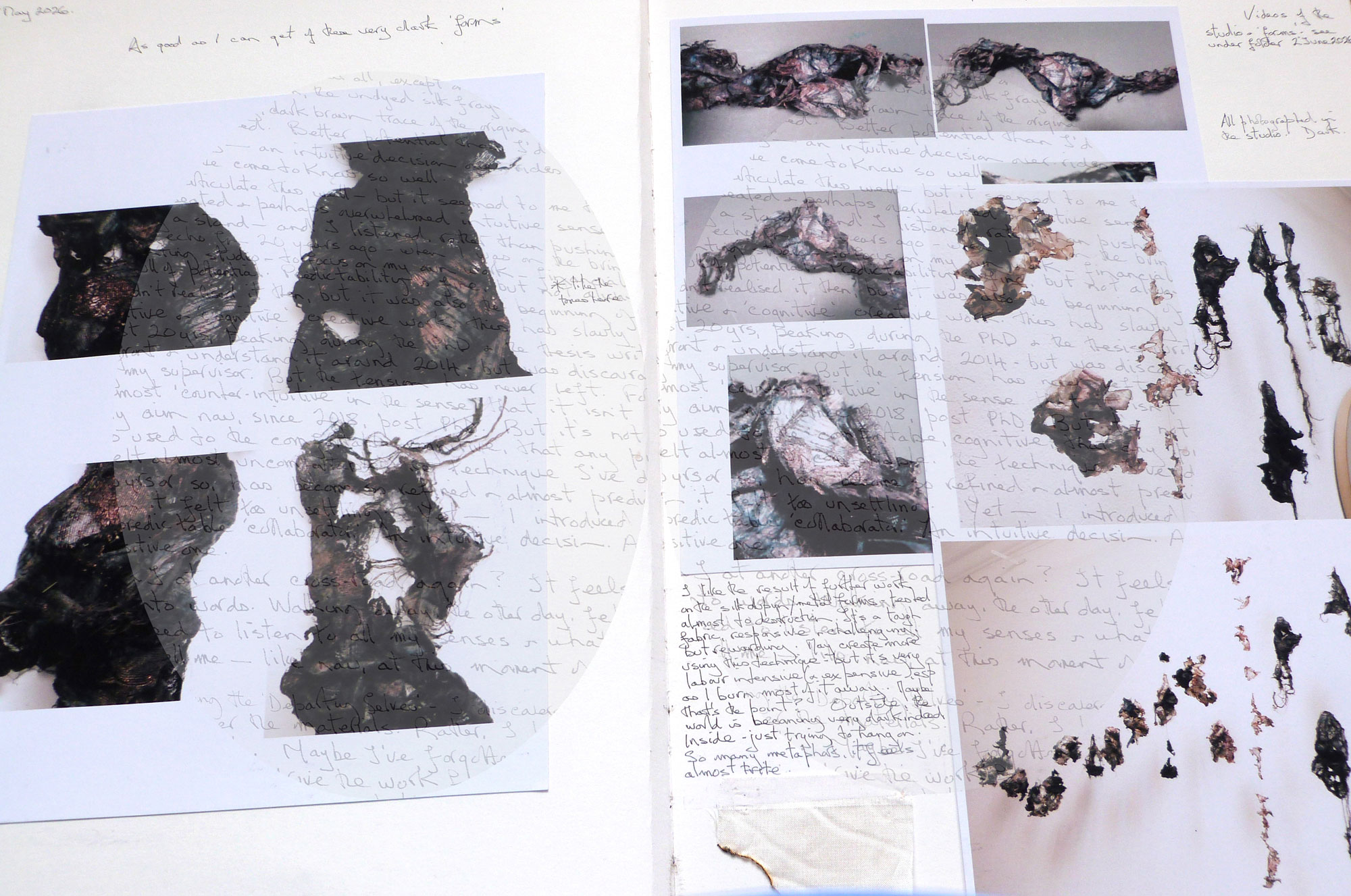
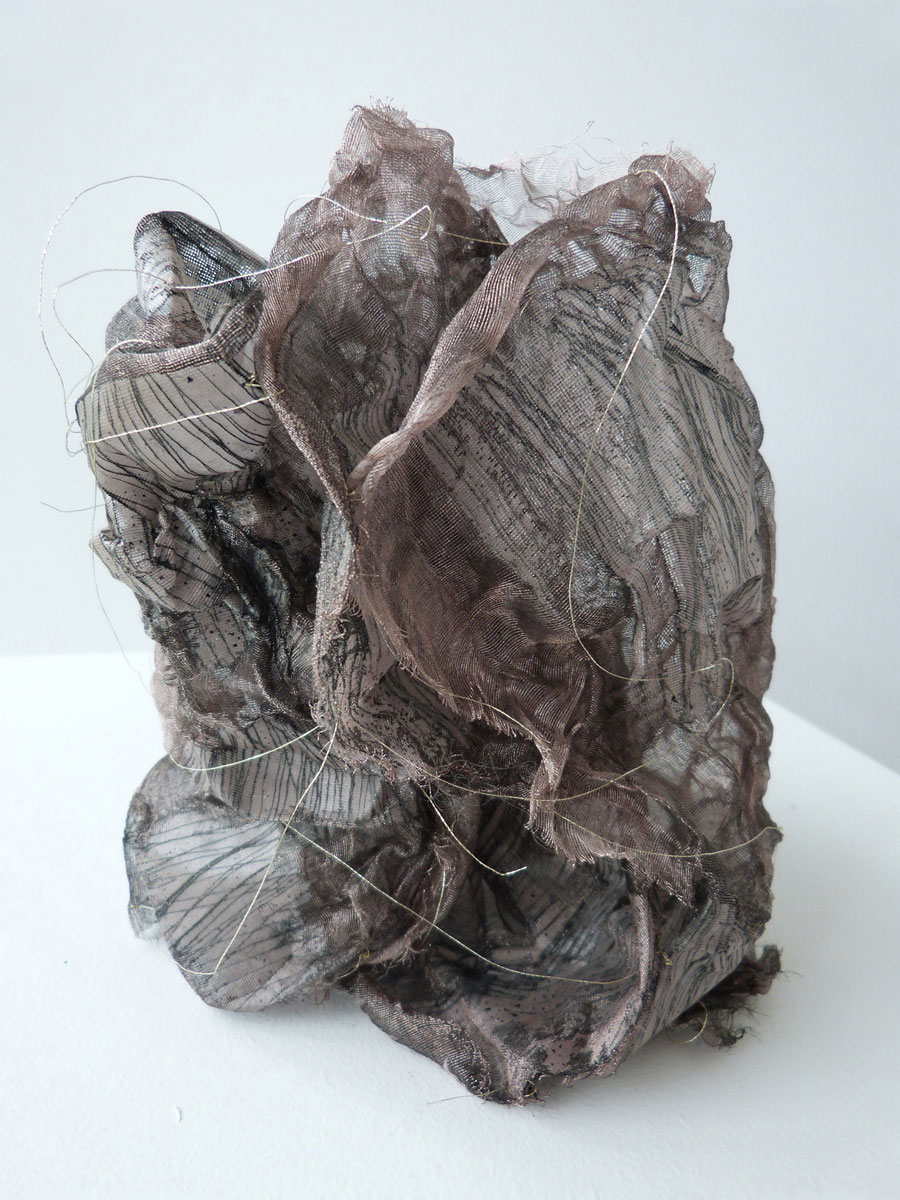
Since opening the boxes of earlier forms, my studio practice has continued to shift. I am making fewer forms now, but each one has become a more extended exploration of the materiality and possibilities of silk/metal fabric.
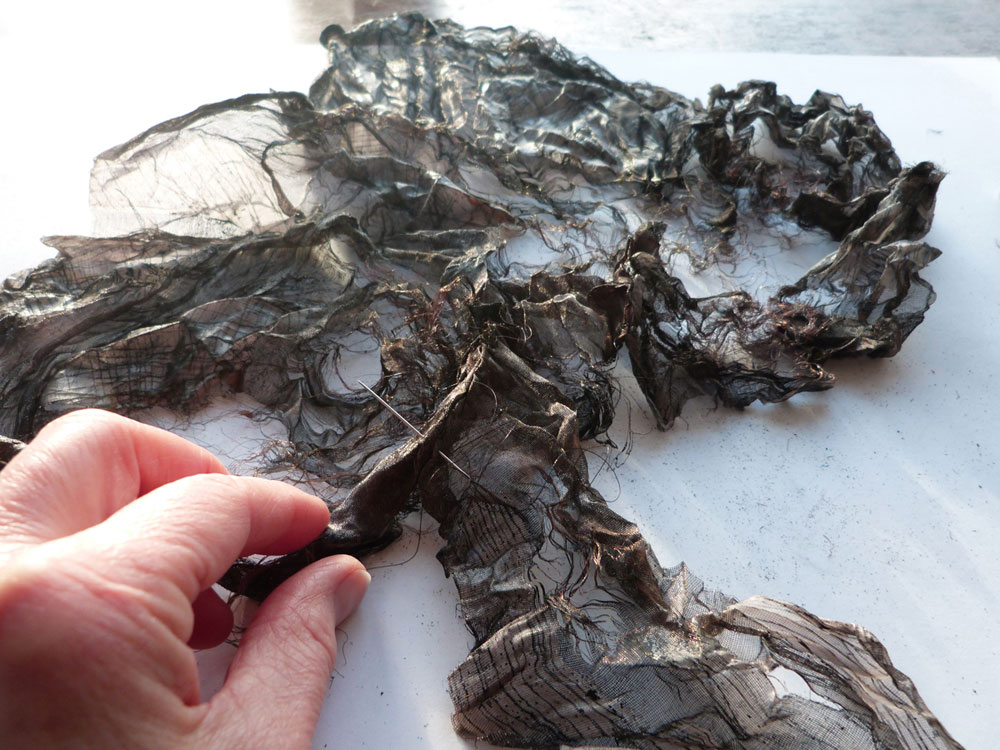
The emphasis has moved increasingly towards the process itself: the complexity of the steps I take, and importantly, the pauses between them. I slow down, reflect, take side steps, return to previously unexplored areas and sometimes backtrack. These pauses have become part of the making
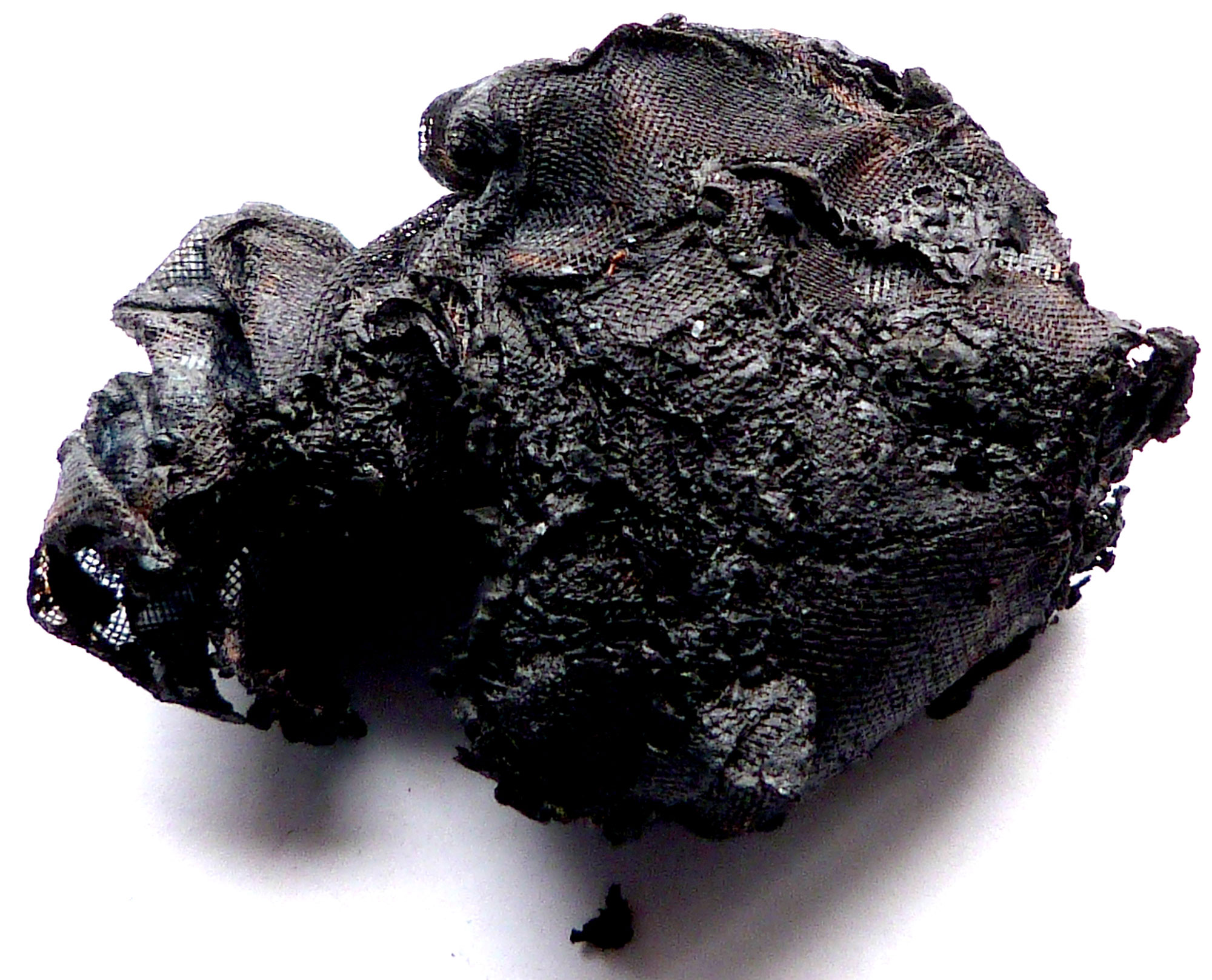
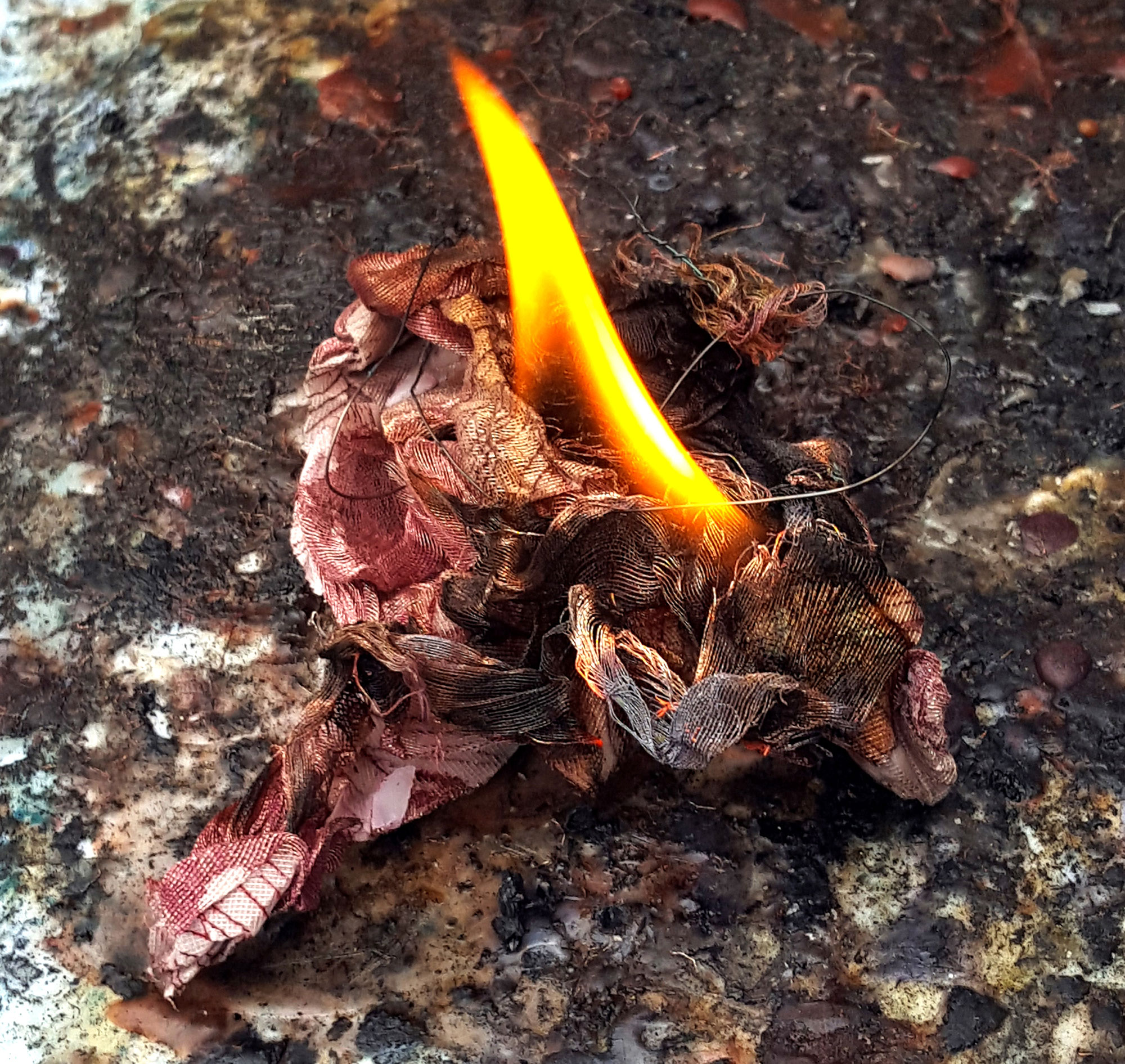
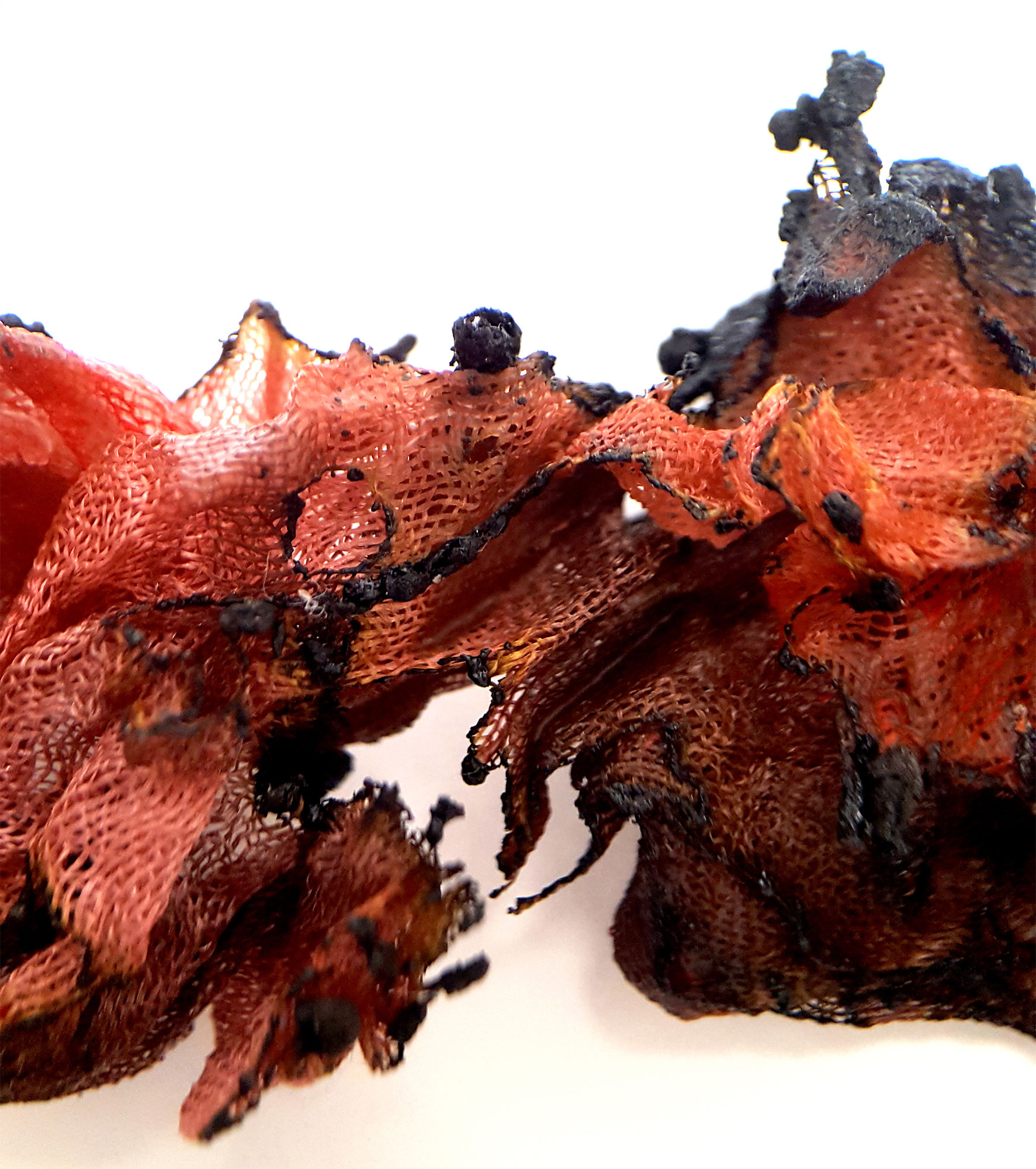
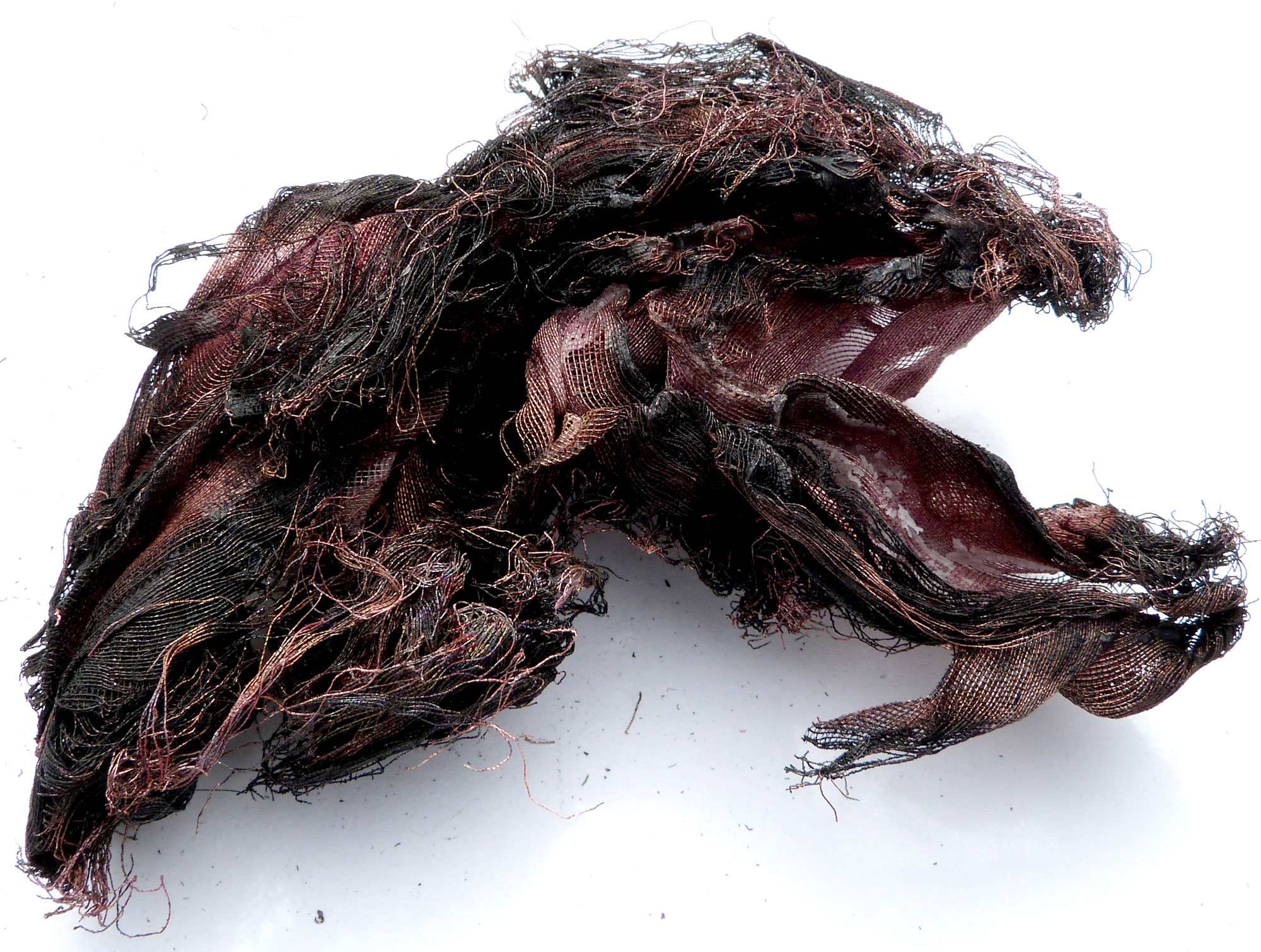
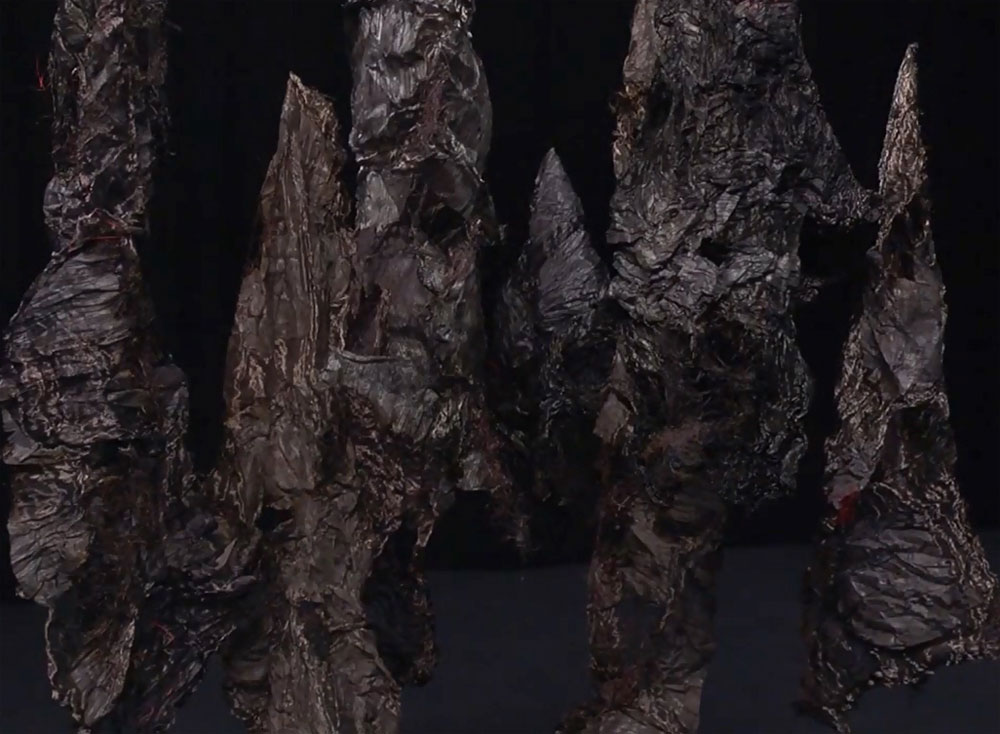
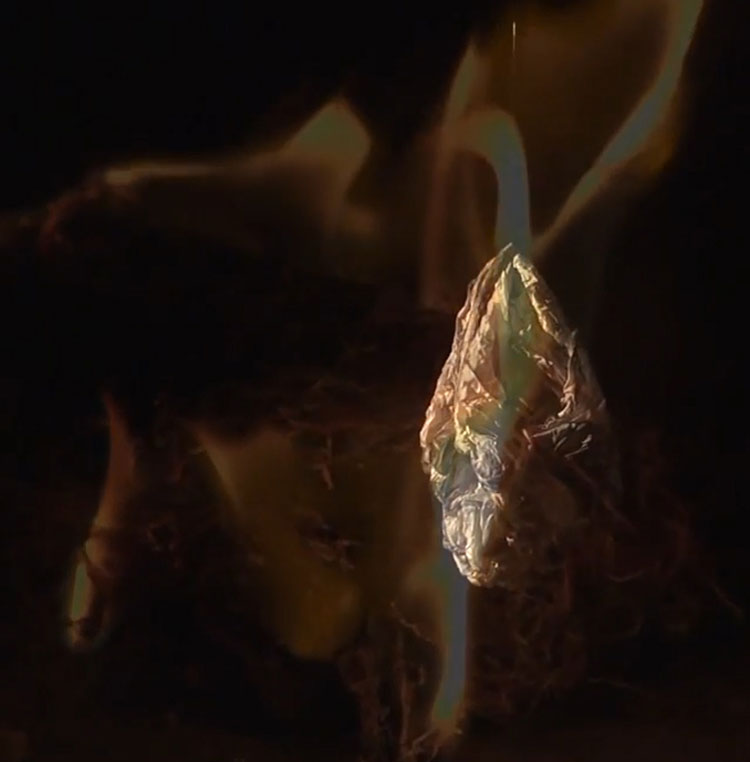
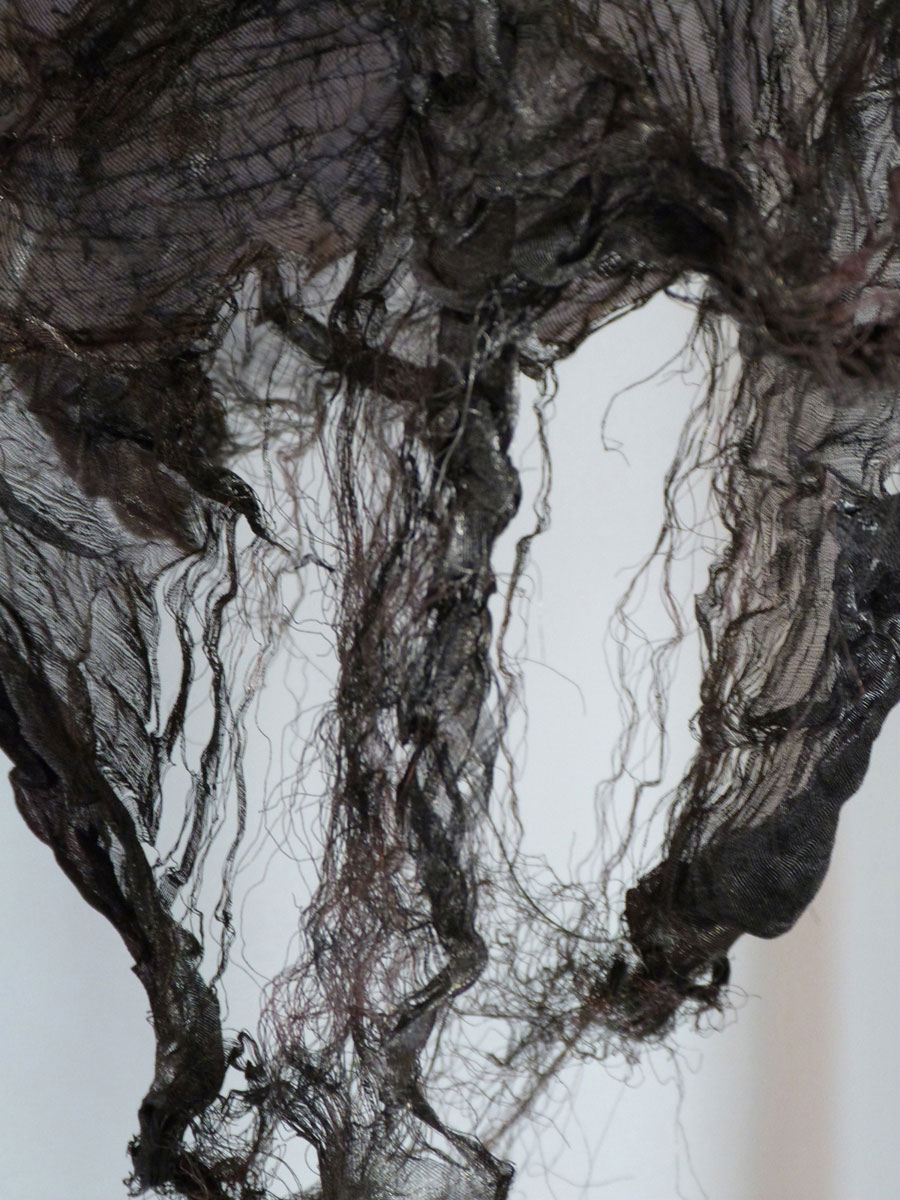
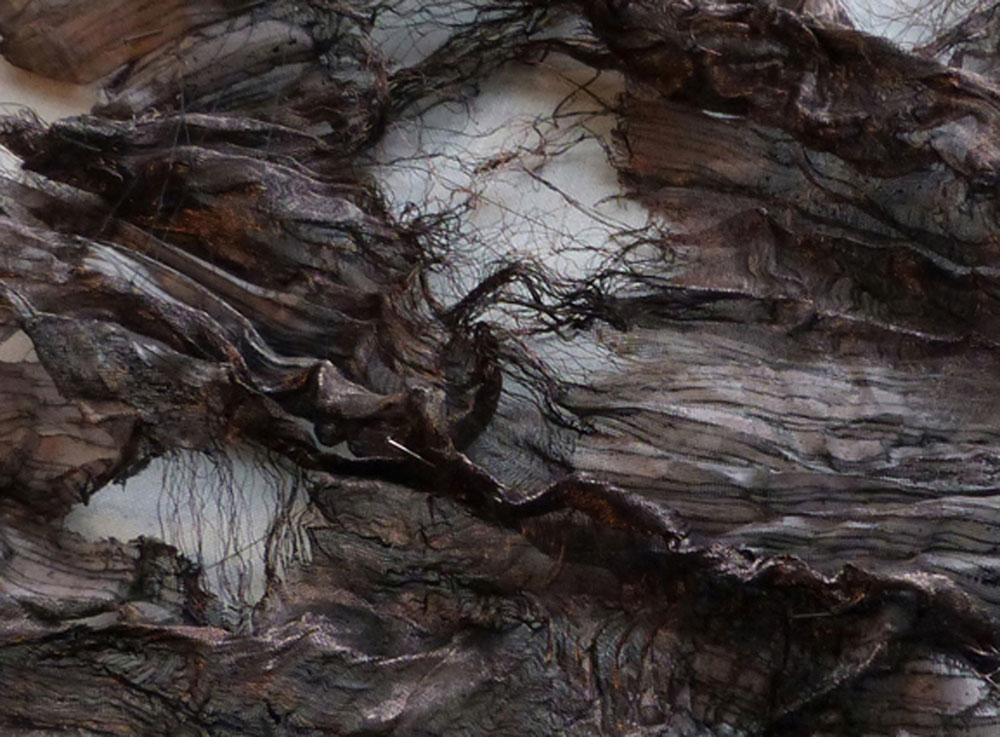
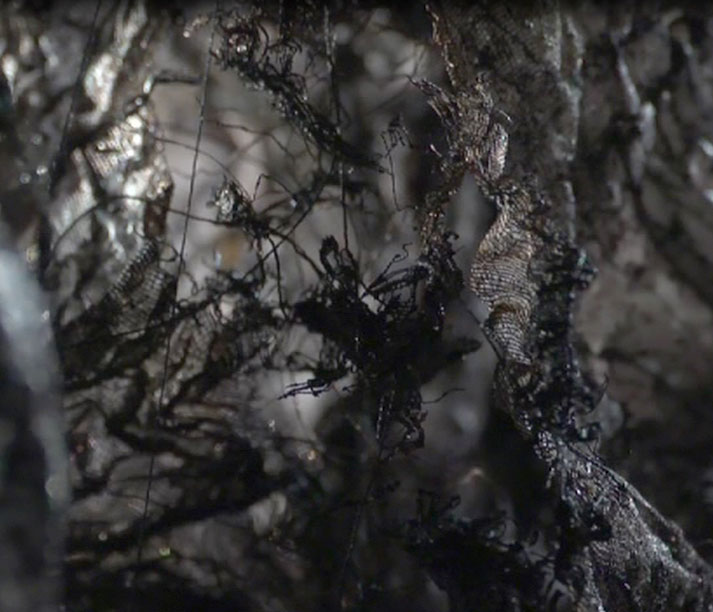
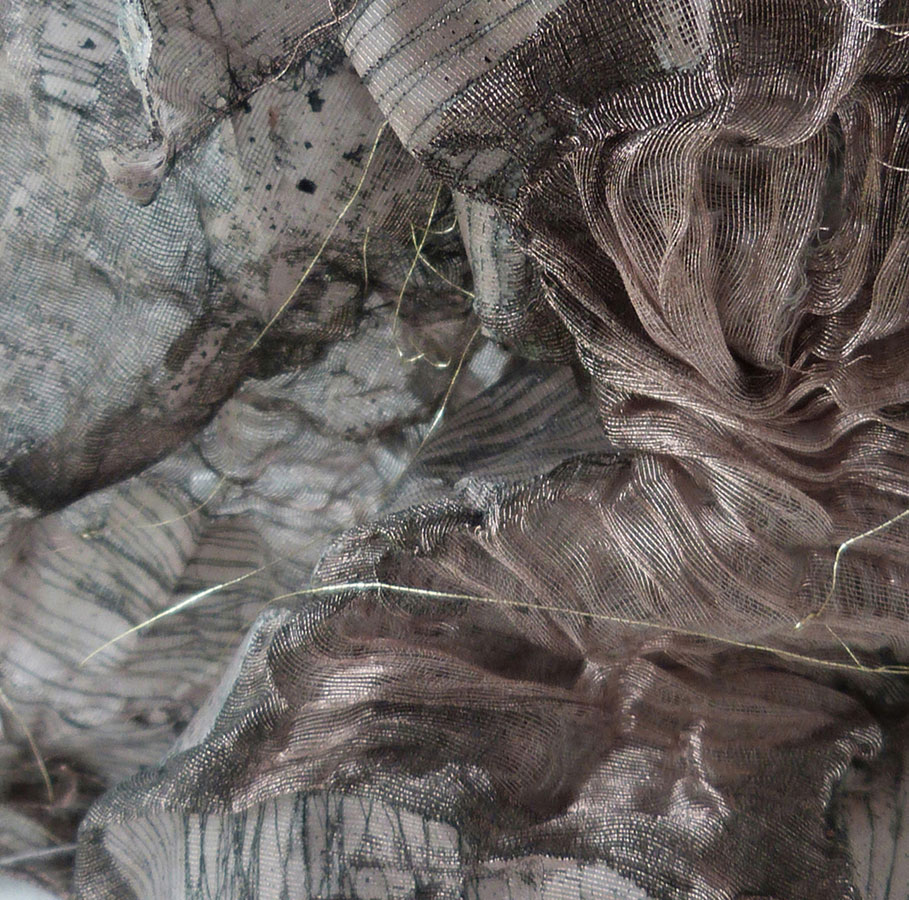
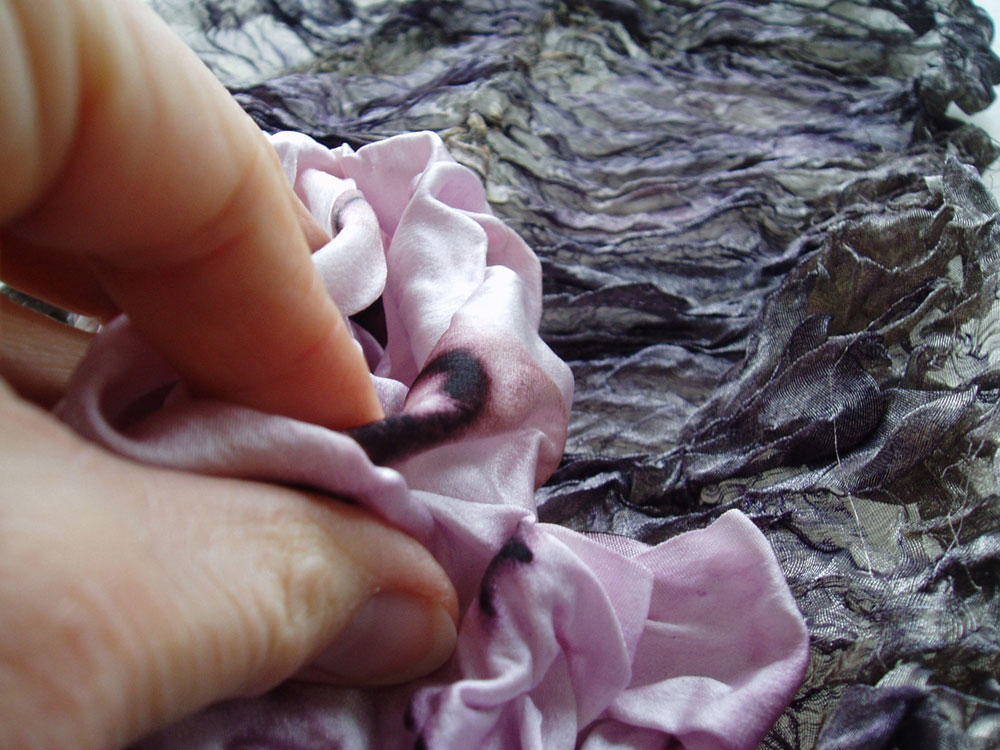
I have been exploring; what happens when I alter the material before beginning to make a form, for example, removing colour from the silk/metal organza, or introduce fine wire, silk and cotton threads as ways of binding, connecting or strengthening the form. My use of fire has also become more selective. Sometimes the fabric is burned to the point where the form almost disintegrates; at other times the resulting surface takes on an almost primordial, igneous quality.
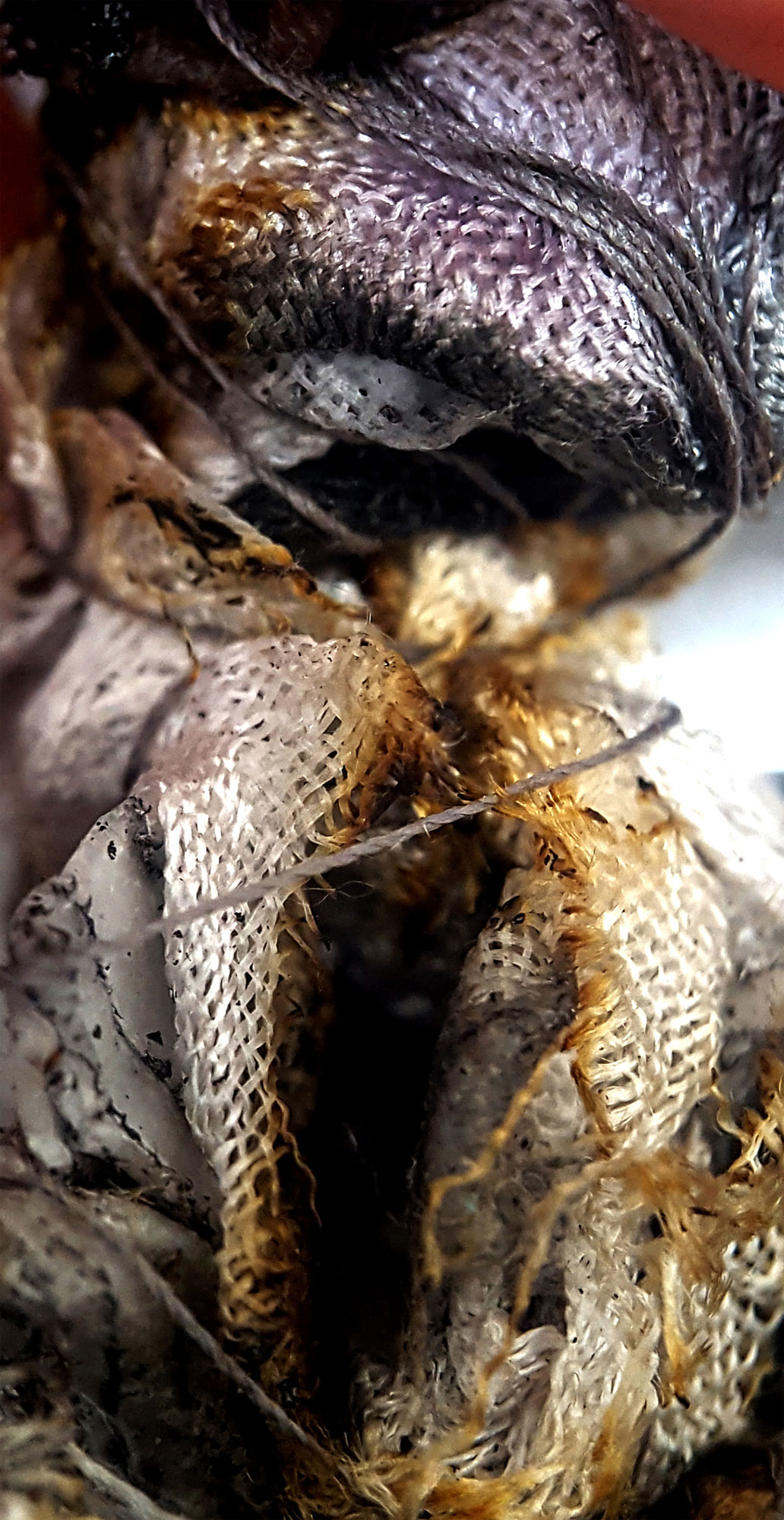
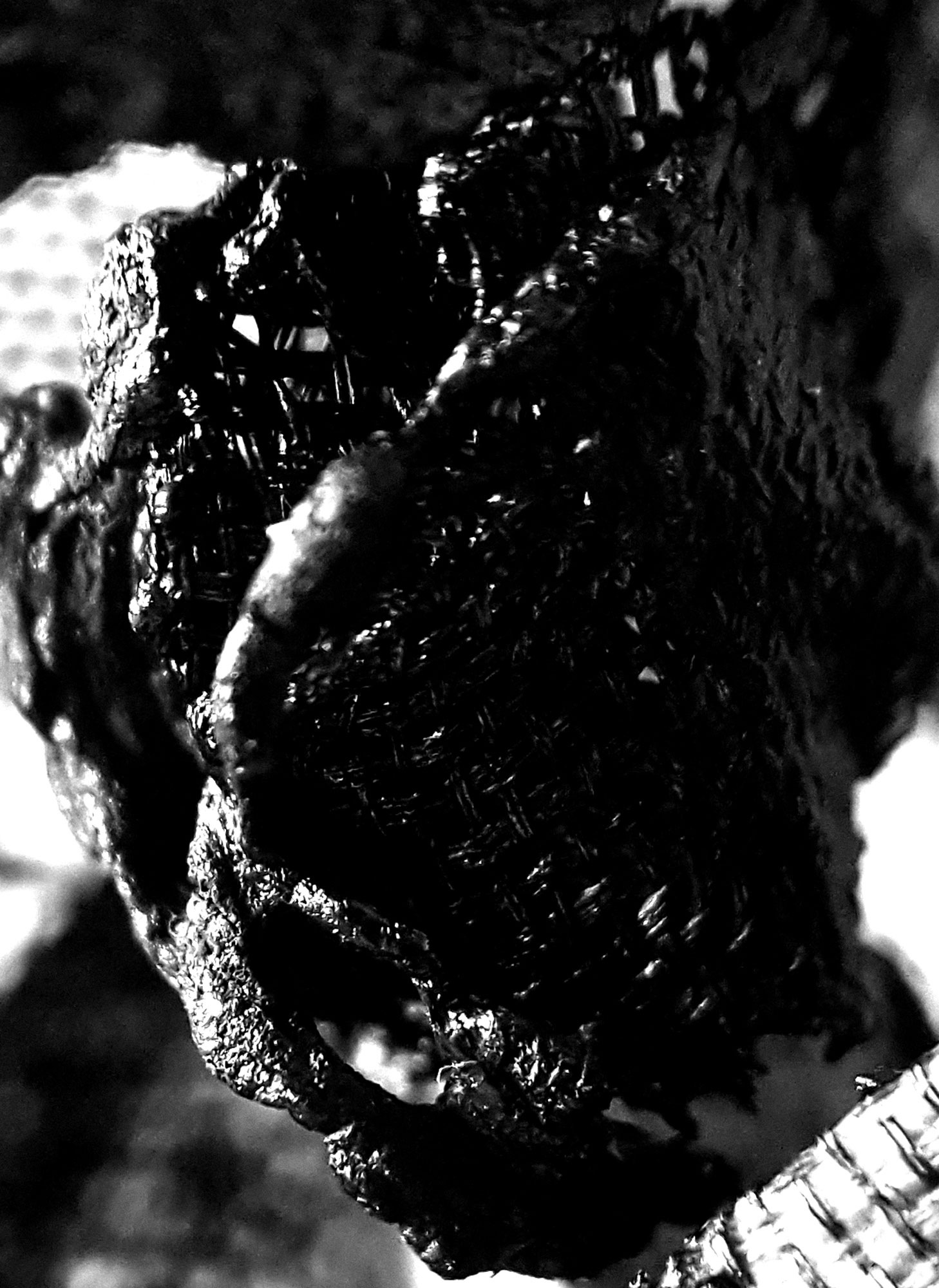
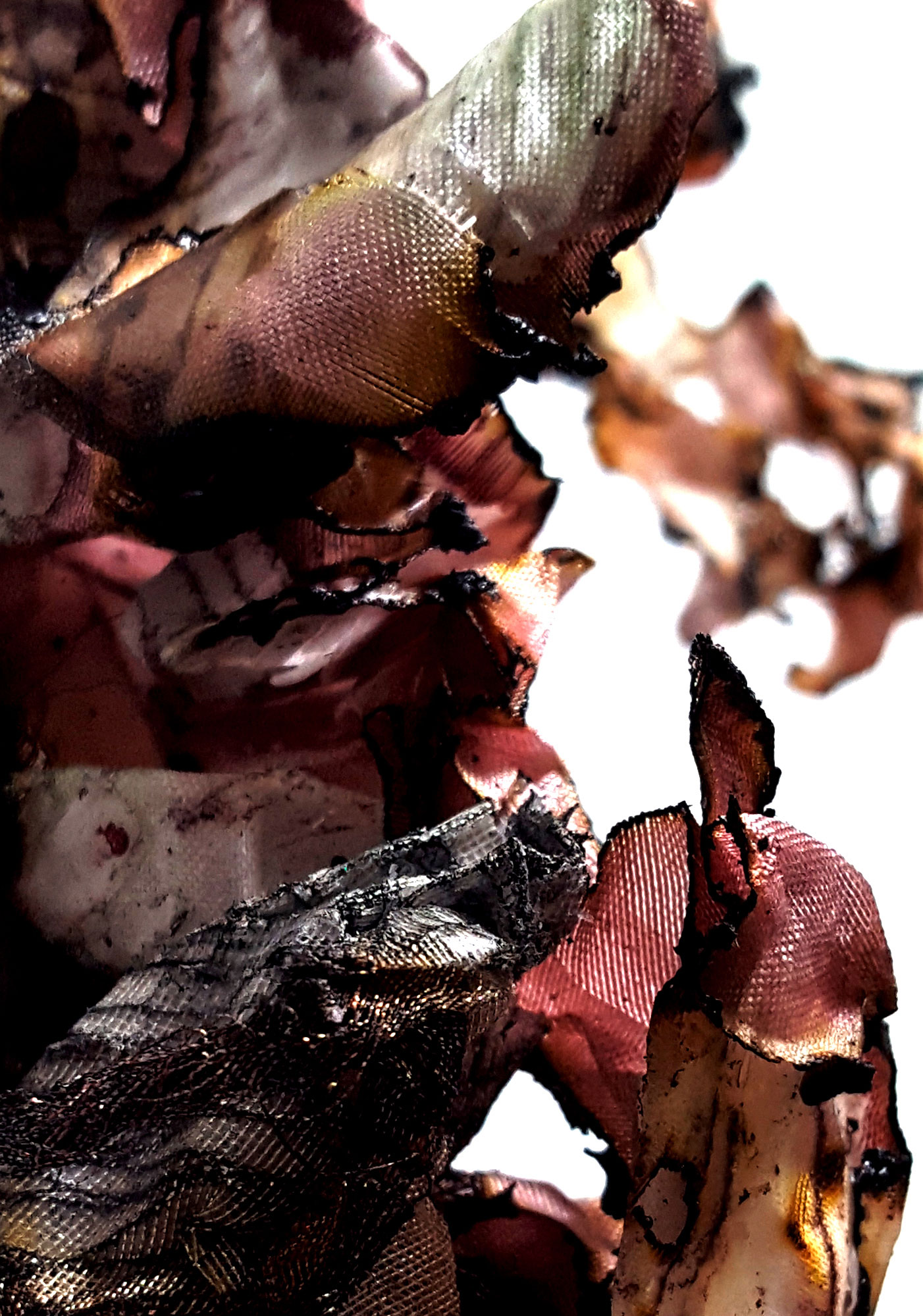
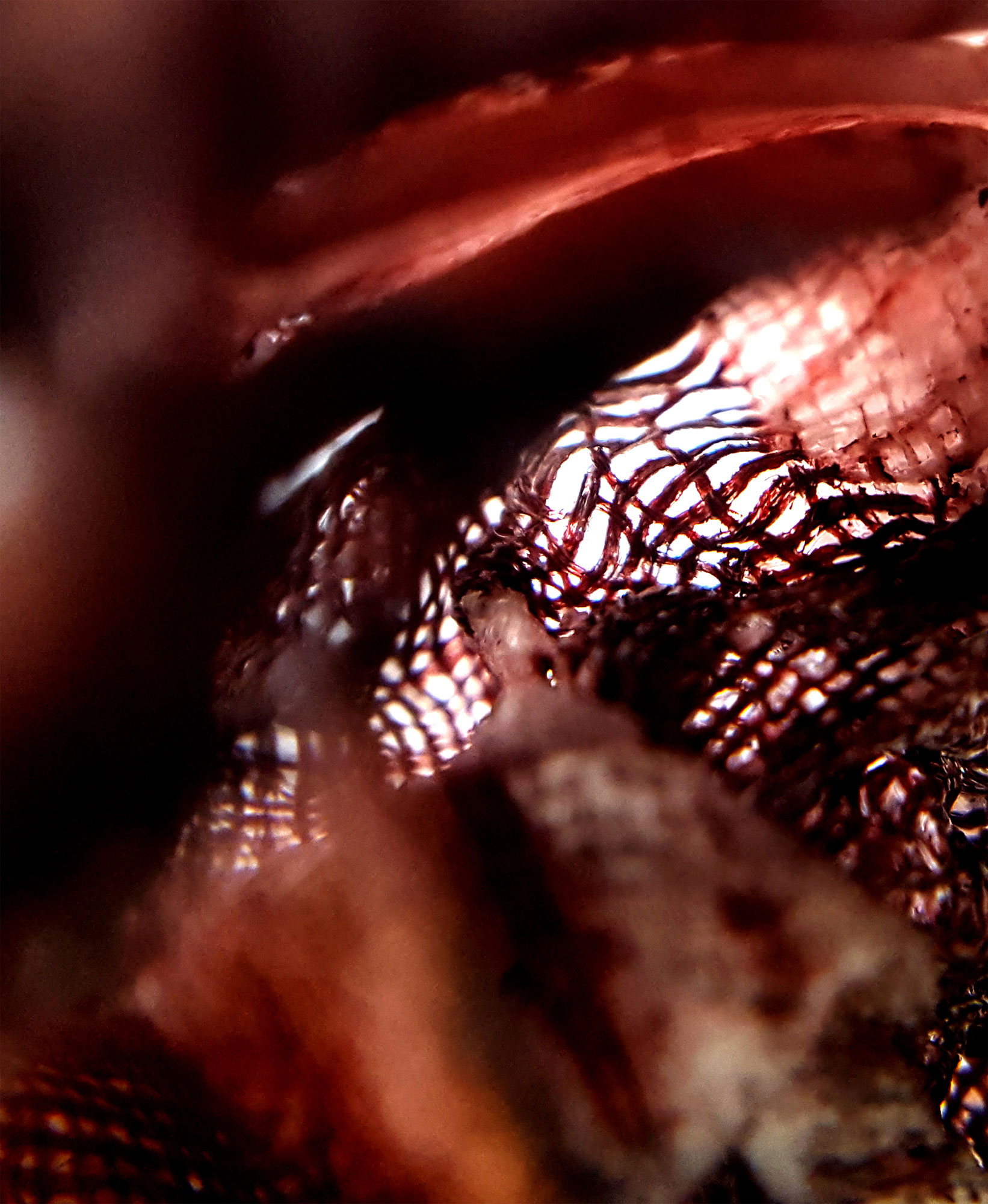
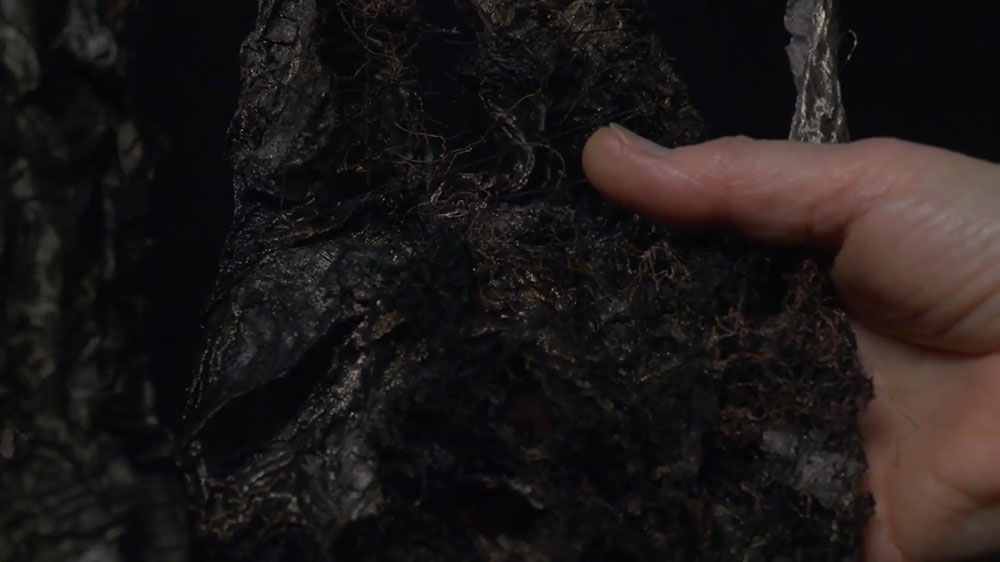
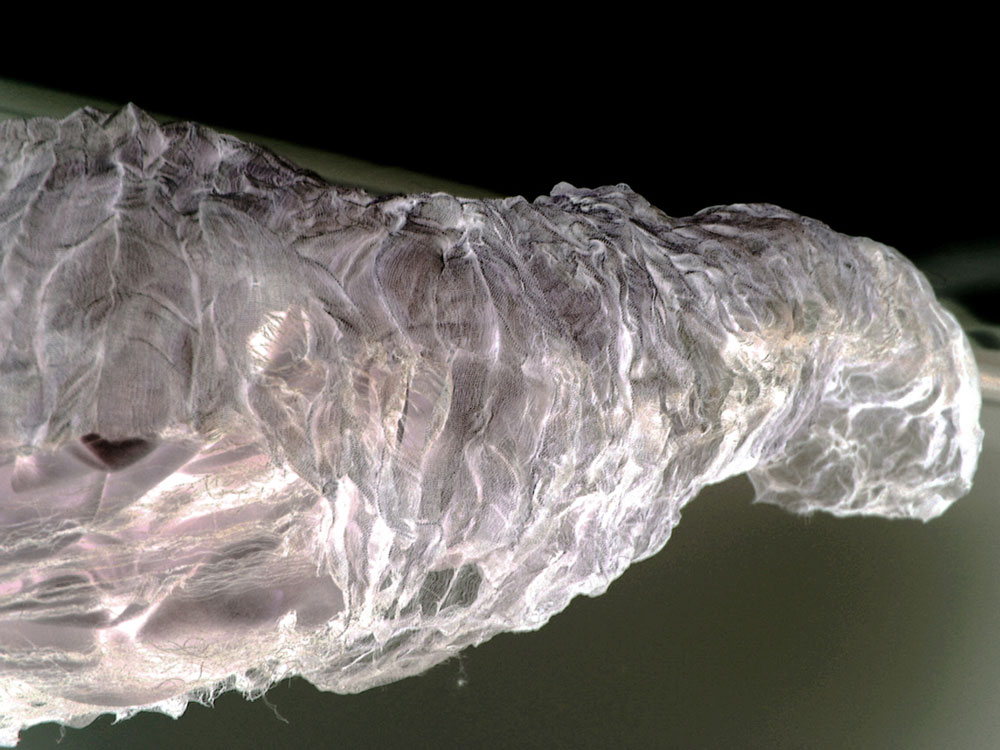
The macro lens on my mobile phone has become increasingly important too. It reveals details within the material that are barely visible to the eye, opening up another way of looking and another stage in the process.
Through this slower and more exploratory way of working, I have become increasingly interested in complexity and nuance within each individual form rather than in accumulation. The work has moved sideways from the iterative process that sustained it for many years, towards something less predictable and more open-ended.
I don’t always know where a form is going when I begin. Increasingly, that not-knowing has become part of the method. I am interested in what the materials might reveal through the process of making, and in allowing the work to develop through pauses, failures, discoveries and unexpected possibilities.
The making of the forms has become an ongoing conversation between materials, process and maker.
For now, I am content to remain within that conversation, to work slowly, to notice, and to see what emerges.
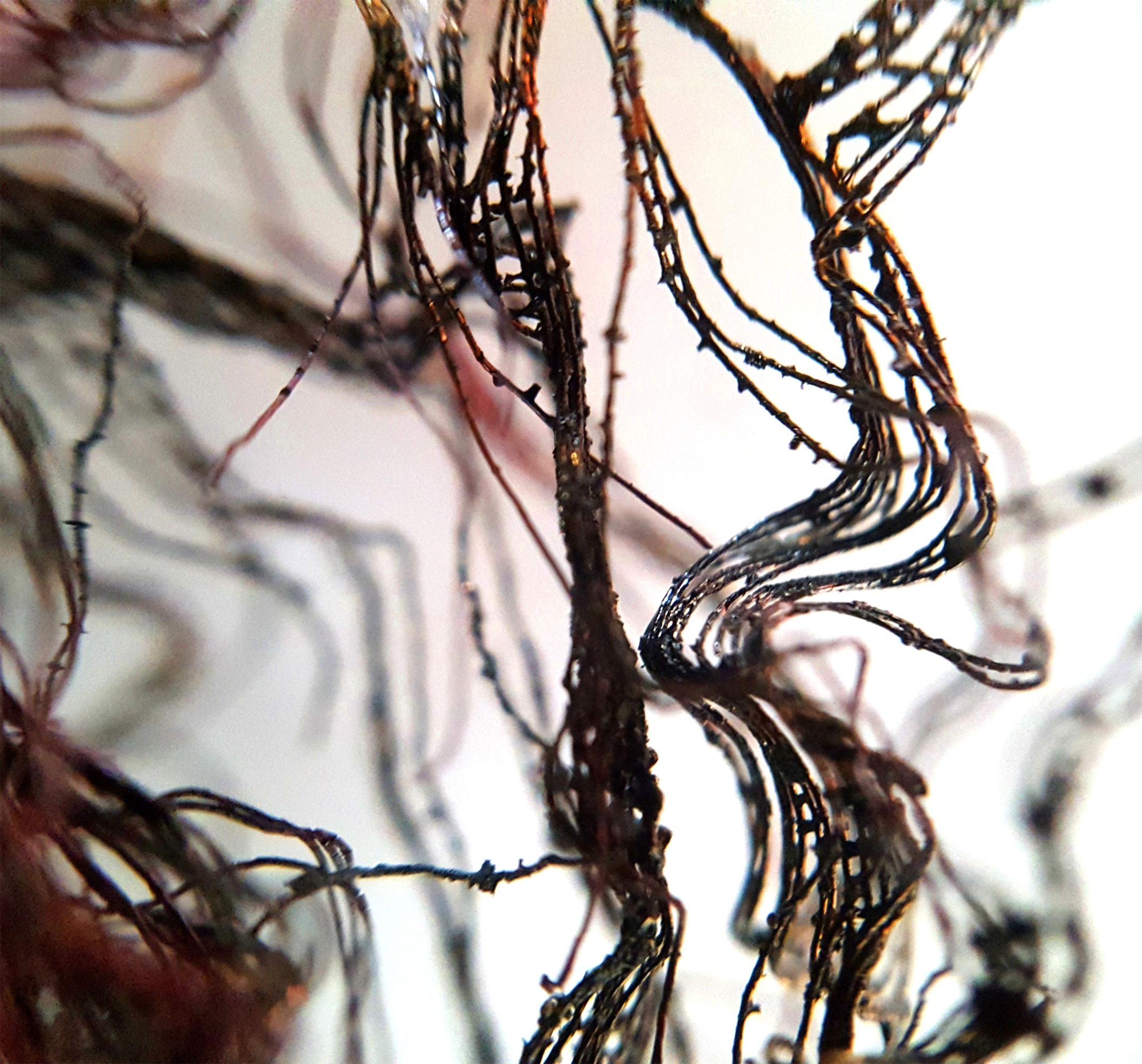
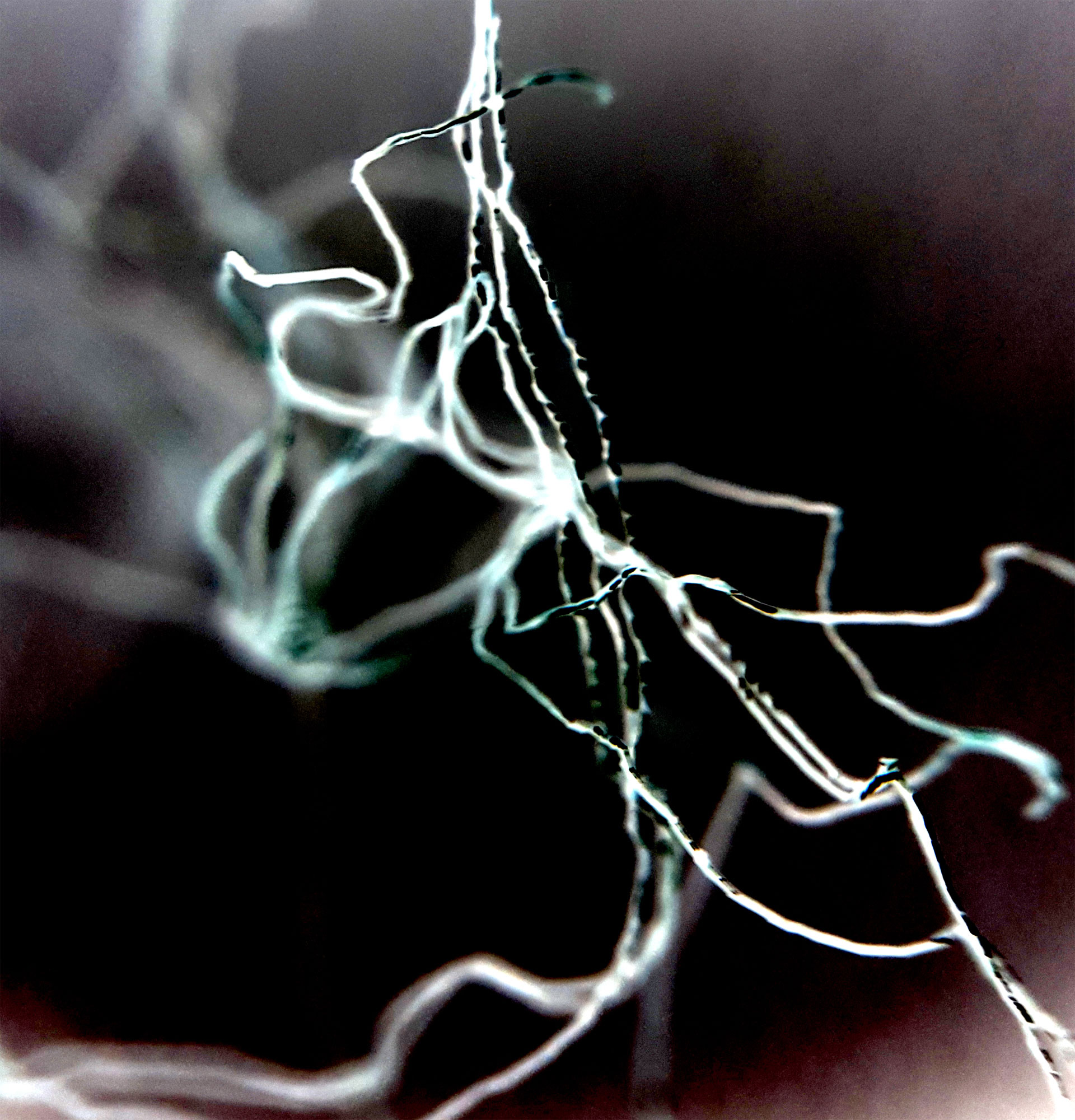
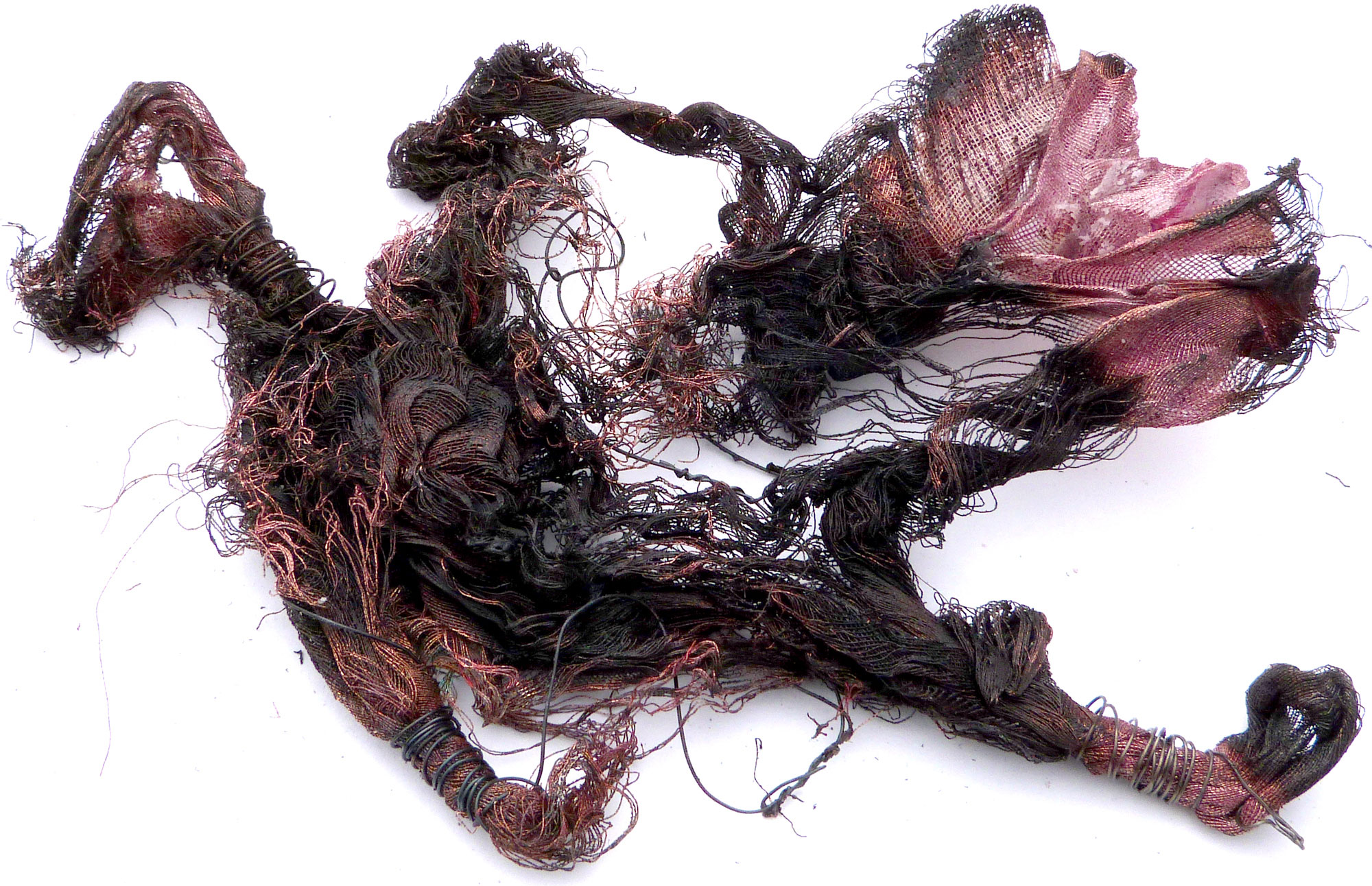
Macro
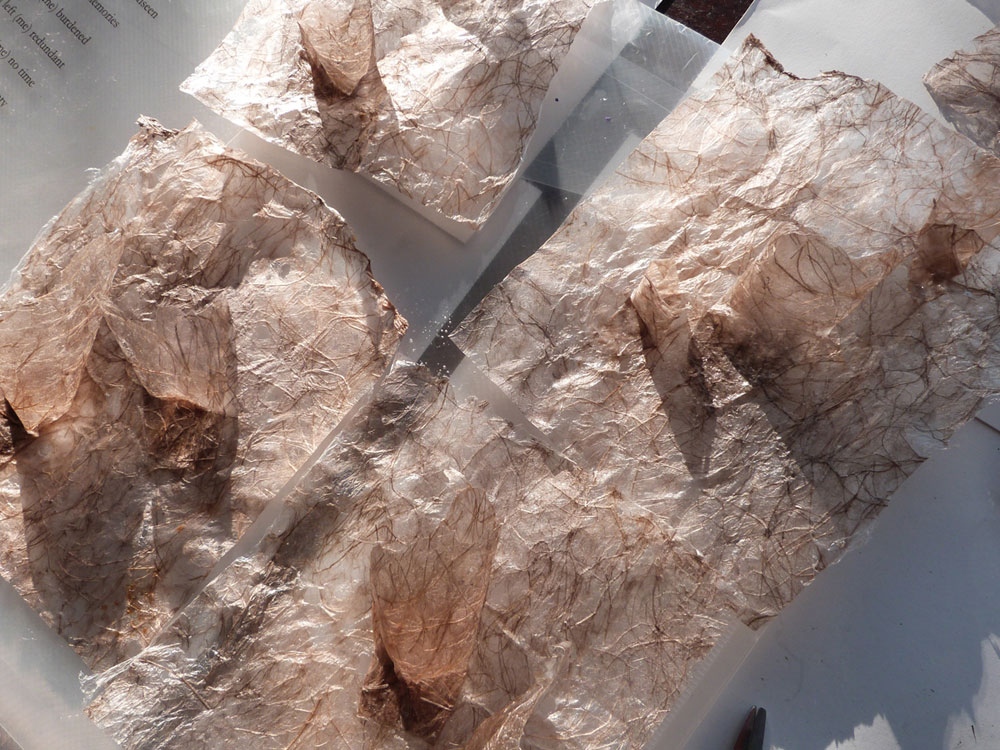
What has emerged has really surprised me, so much so that I now suspect that a more authentic image is not actually what I’ve been searching for at all. Rather, it’s what lies buried deep within the ‘forms’ dark, inner world, unseen by the naked eye, this is what I’ve been looking for, this is where their true essence lies.
This latest series of my silk forms are not only uncomfortable to make, but they’re also extremely dark, coming out of somewhere quite primordial. But, far from being disturbing, these macro images are offering certainly the artist and perhaps the viewer, a vital portal into a parallel universe.


Embodiment of Ageing
‘Memory is a re-creative act, each time we remember we re-construct, rather than re-live the experience’
Millar, 2013, p. 13
The images here are from a very significant part of my PhD into ageing. In our 60’s and beyond, there is a desire for a much deeper self-knowing. The perceptions we hold close of our younger selves, hold secrets which are worth taking time to uncover. The slow, challenging making of this textile work has conveyed new meaning to me, offering unforseen yet valuable glimmers of understanding into the nature of identity and personality. It is a work in progress.


Poem House
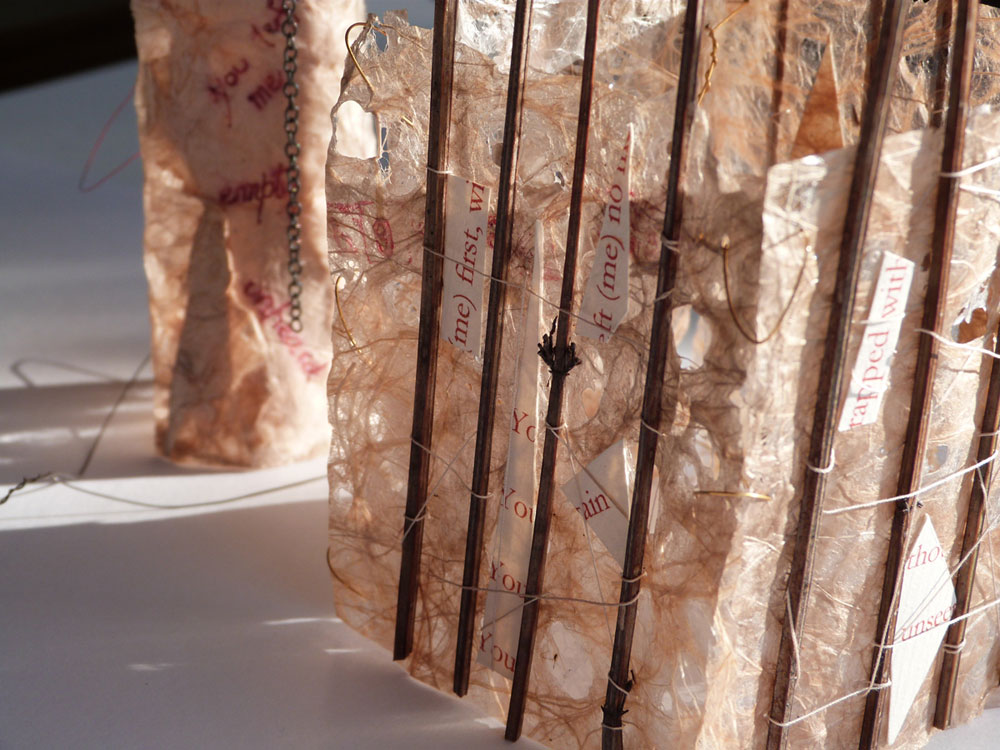
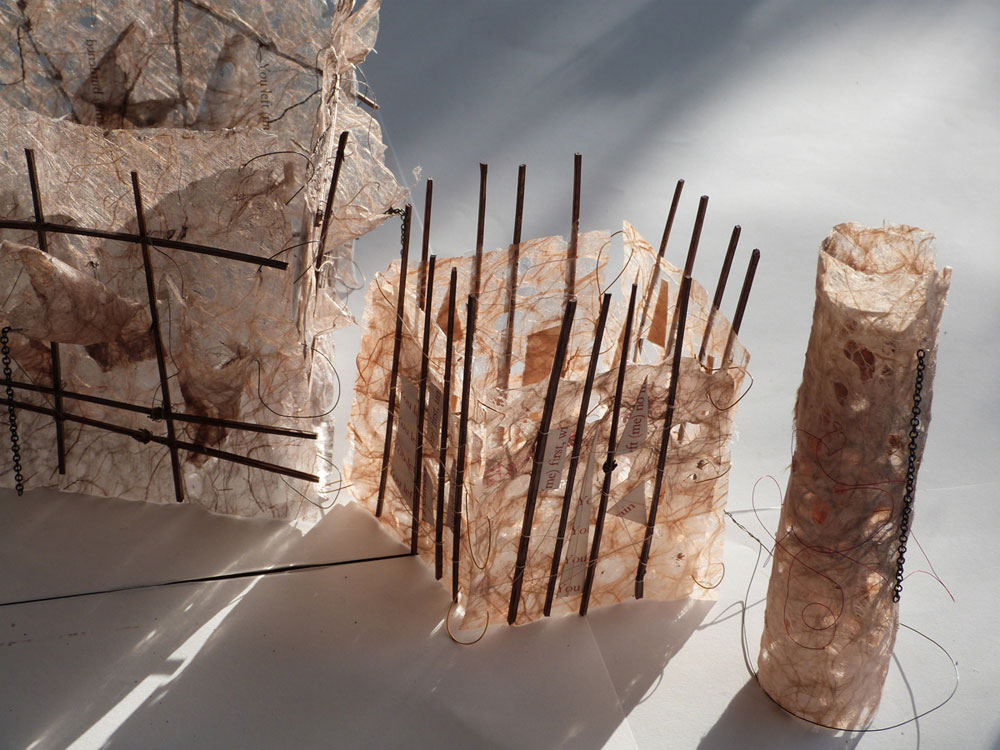
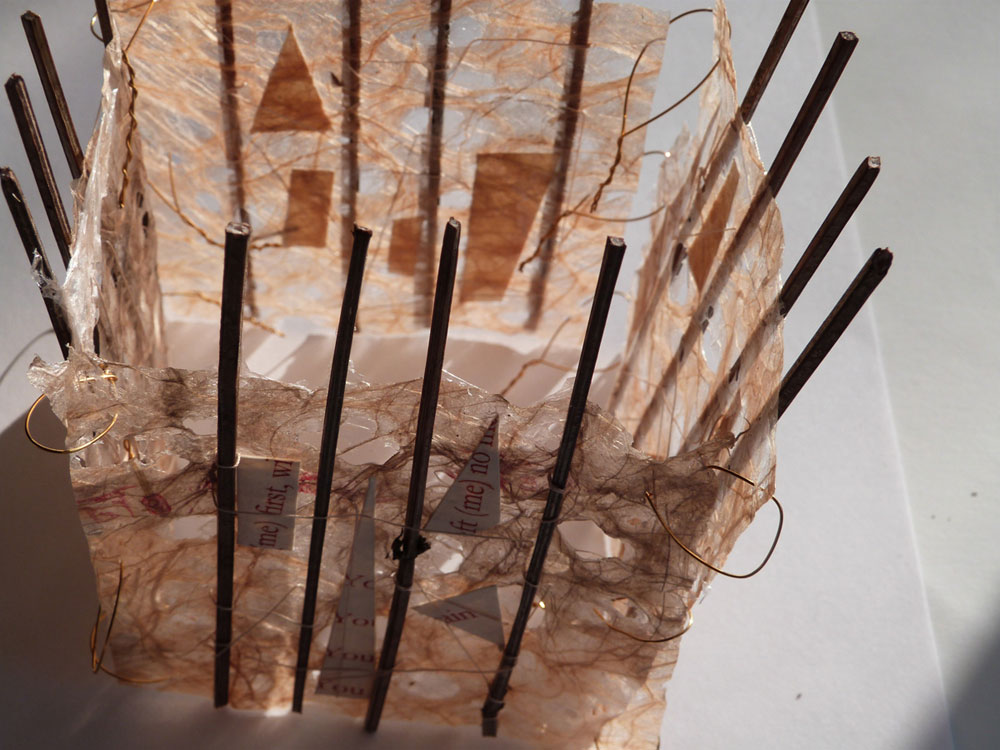
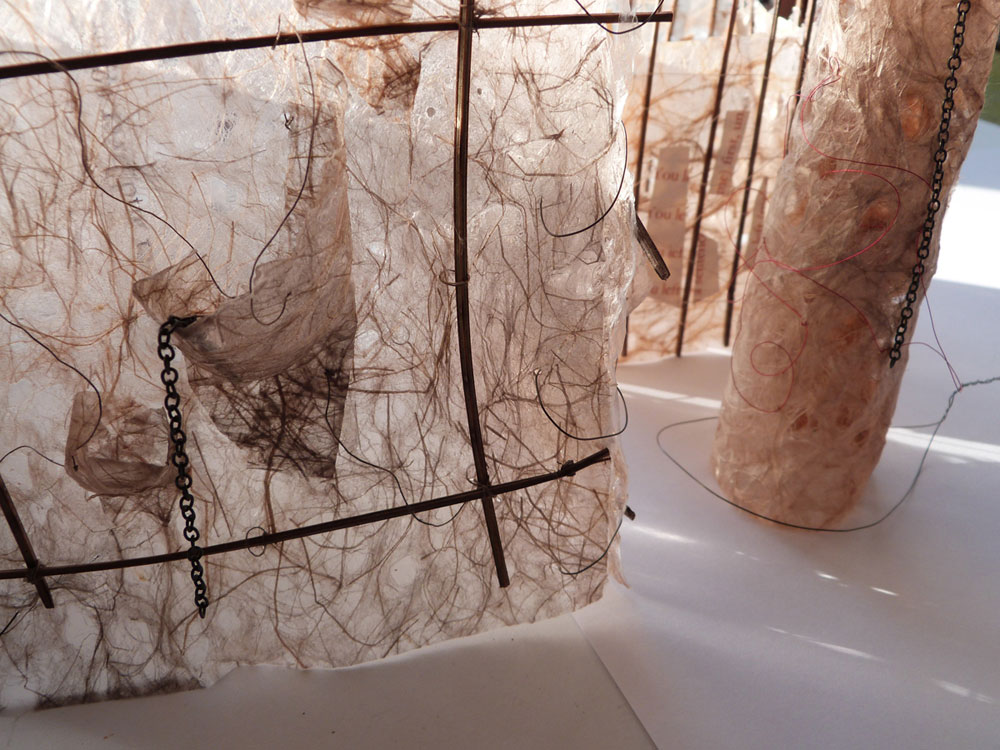
These images are part of my ongoing research into ageing. I had been working with Scottish artist, Brigid Collins on how I might integrate text into my research artwork. She introduced me to the idea of a Poem House as a possible ‘container’ for words and images. The 3D aspect of this has worked well for me, particularly as at the same time I had been using heuristic inquiry (see below) as a method of exploring aspects of loss and grieving. Creating the poem house as a visual articulation of words left unsaid, offered valuable insight which I have been able to develop and incorporate into my PhD thesis.
‘Heuristic inquiry is a process that begins with a question or problem which the researcher seeks to illuminate or answer. The question is one that has been a personal challenge and puzzlement in the search to understand one’s self and the world in which one lives. The heuristic process is autobiographic, yet with virtually every question that matters personally there is also a social-and perhaps universal significance.’
Moustakas, 1990, p15